Elections and policy
Notice how the winner’s policies shape resources and development areas.



GAME · Society & democracy
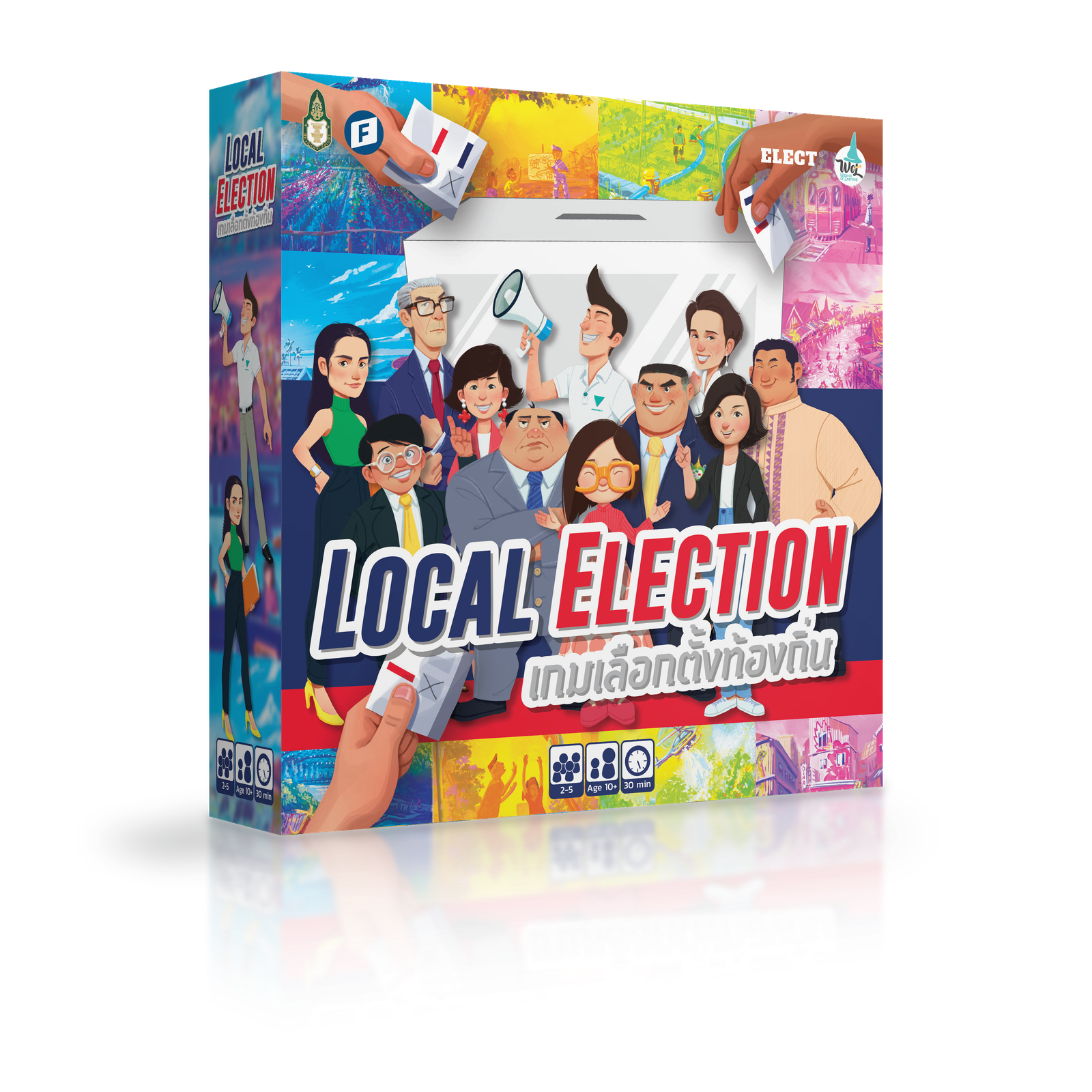
A game about local elections
Elect a leader and see which projects can go ahead in two communities.
Vote for a candidate, then use the resources and building areas their policies allow to develop two shared communities. Score for fulfilling dreams and contributing to projects.
Ask the relevant organization about access and product details.
In use & related media · 4 sources →THE EXPERIENCE
Players are residents with different dreams for a large and a small community. Across three elections, vote for leaders and build projects on shared boards.
The elected leader determines available resources and development areas. Players must decide how to use shared resources to fulfill dreams and contribute to projects.
Compare policies, resources and the areas each candidate supports.
Choose a project for an area supported by the rules and available resources.
Young people, teachers, facilitators and people interested in local development
Classrooms, youth activities and conversations about local communities
Connections to themes in the game, not evidence of measured outcomes.
Simulate elections and participation in local development, connecting to participatory decision-making in target 16.7.
Read the UN goal ↗This content has not been approved by the United Nations and does not reflect the views of the United Nations or its officials or Member States. United Nations SDGs ↗
OPEN THE BOX
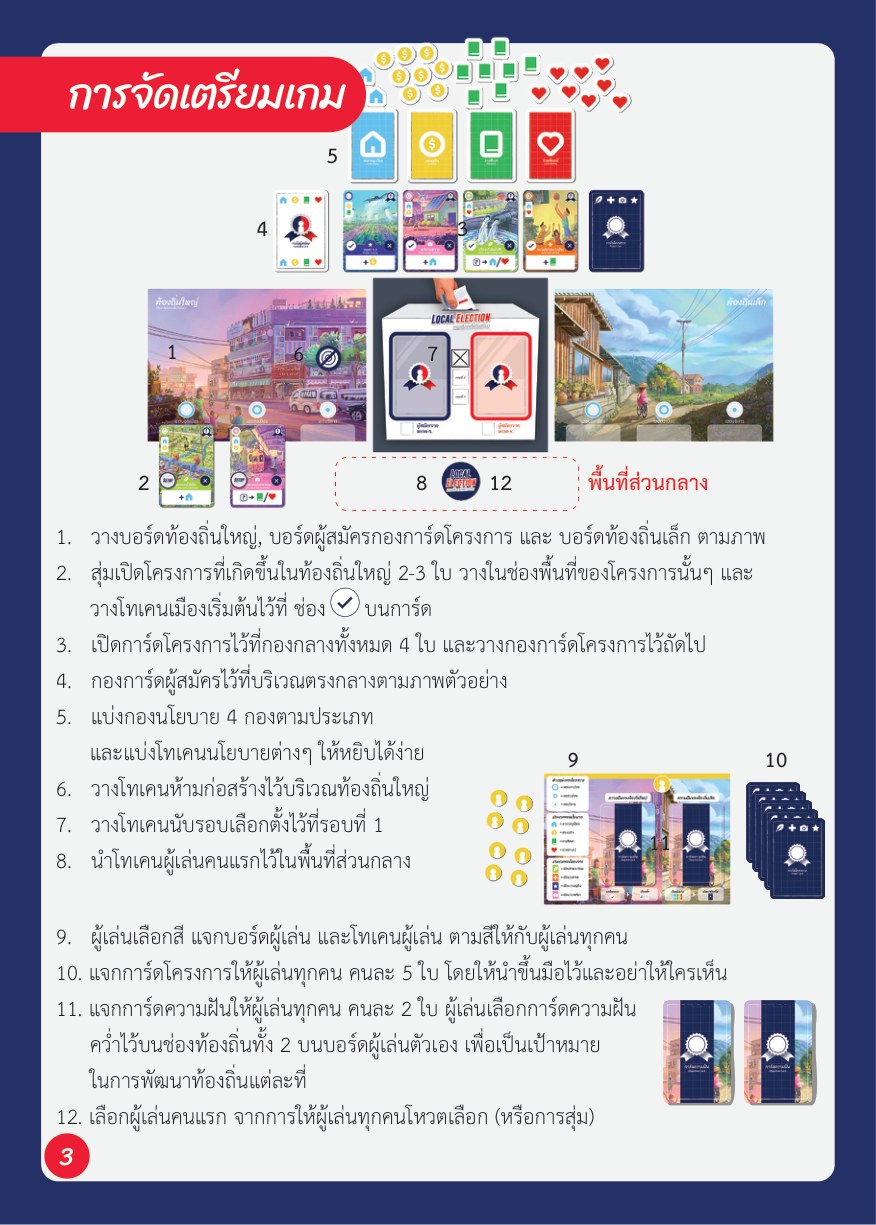
Play three election rounds. Vote for a leader who determines resources and development areas, then take turns playing projects, drawing cards and using project abilities on shared community boards. After the third round, score fulfilled dreams and personal contributions to projects. The highest score wins.
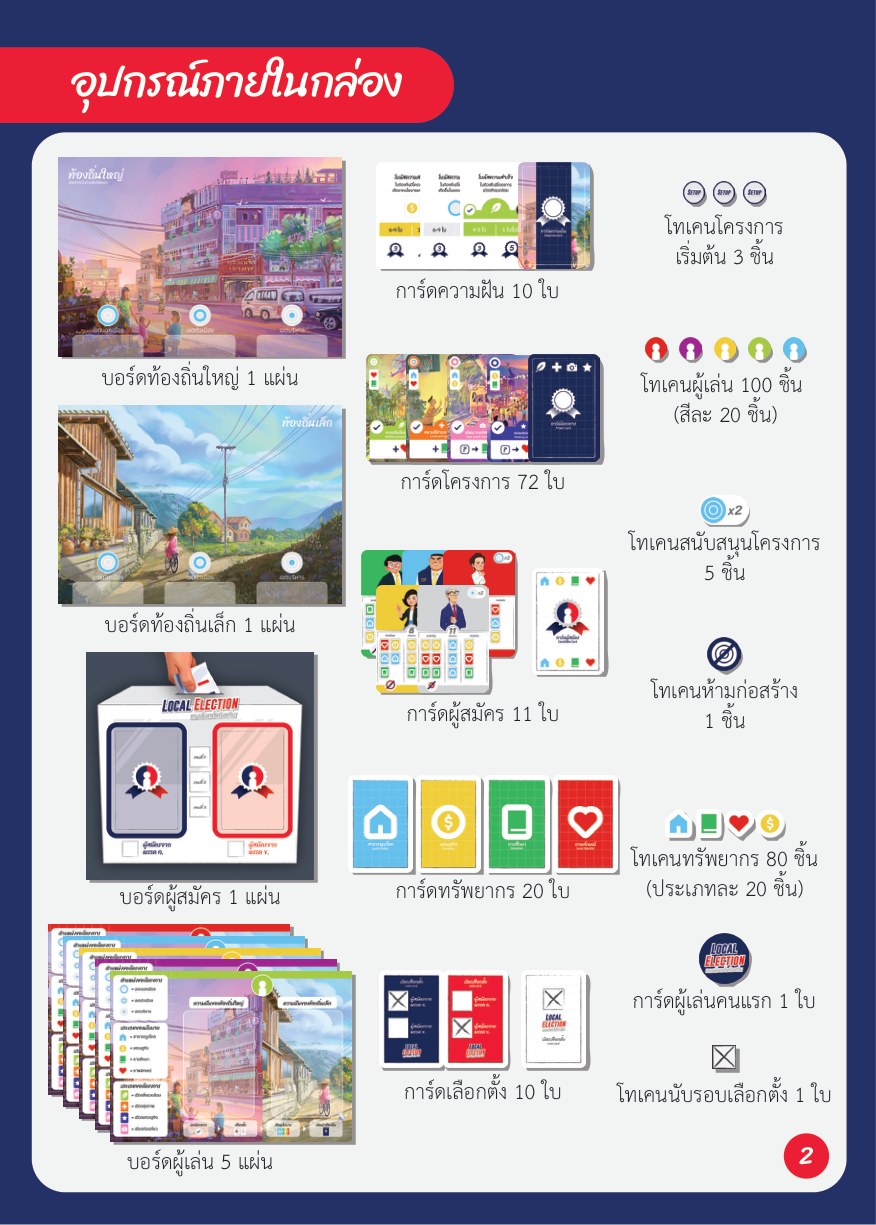
Large and small community boards, player and candidate boards, project, candidate, voting, dream and resource cards, plus tokens listed in the rulebook.
Images from Local Election source materials. Open an image for full size.
LEARNING THROUGH PLAY
Use the experience at the table as a starting point for questions and conversation.
Notice how the winner’s policies shape resources and development areas.
Compare players’ dreams with projects on the shared community boards.
Discuss choices for using shared resources in local development.
FROM PLAY TO CONVERSATION
For teachers, parents and facilitators. Adapt to your group and time.
Invite players to name a community priority and introduce dream cards, projects and elections as a model for discussion.
How might people in a community have different priorities?
After each election, notice the available resources, development areas and projects on the shared boards while letting players make their own decisions.
Which projects did this election make easier or harder to pursue?
Compare fulfilled dreams with each player’s project contributions, then consider how the model differs from real local decisions.
Whose perspectives would be needed to design a real community project?
PLAY OUT IN THE WORLD
Discover the game through events, player and teacher voices, and related studies.
Events, articles and videos from their original sources. Open each entry for its context, game edition and scope.
Showing 4 of 4 sources
The Active reports the origins of the game and stakeholders’ perspectives on learning about local democracy.
Media · Interview
Article and interviewee accounts
Local Election, first edition
The Active describes a game review by developers from WoL and ELECT. Video metadata was found in search; playback has not been checked.
Game introduction video · search metadata
Video description; playback not checked
Local Election, first edition
Social Innovation for Creative Society describes participating in the festival and producing a Local Election introduction video.
Online game-introduction activity
Organization activity report, not a learning-outcome evaluation
Local Election, first edition
A study summary in the King Prajadhipok’s Institute library describes a Democracy Game Festival trial and how participant feedback was collected.
Festival · Trial and participant feedback
Study summary in the institute library
Festival case before Version 2
MADE WITH CARE
Illustration and organization credits follow the original rulebook, page 10. The creator confirmed the co-designers. Chanon’s English spelling follows the Wishlist V2 rulebook.
KEEP EXPLORING
Each game opens another perspective. Find the next question you want to explore together.
Explore all games & toolkits →
Go to work for wages, or stay home while the bills keep coming?
For sale
Elect a leader and see how budgets and policies shape your community.
Request from organization
Which problem do you tackle first when the whole community is waiting?
Request from organization