Income and risk
Compare working outside and staying home within the game model.

GAME · Society
Go to work for wages, or stay home while the bills keep coming?
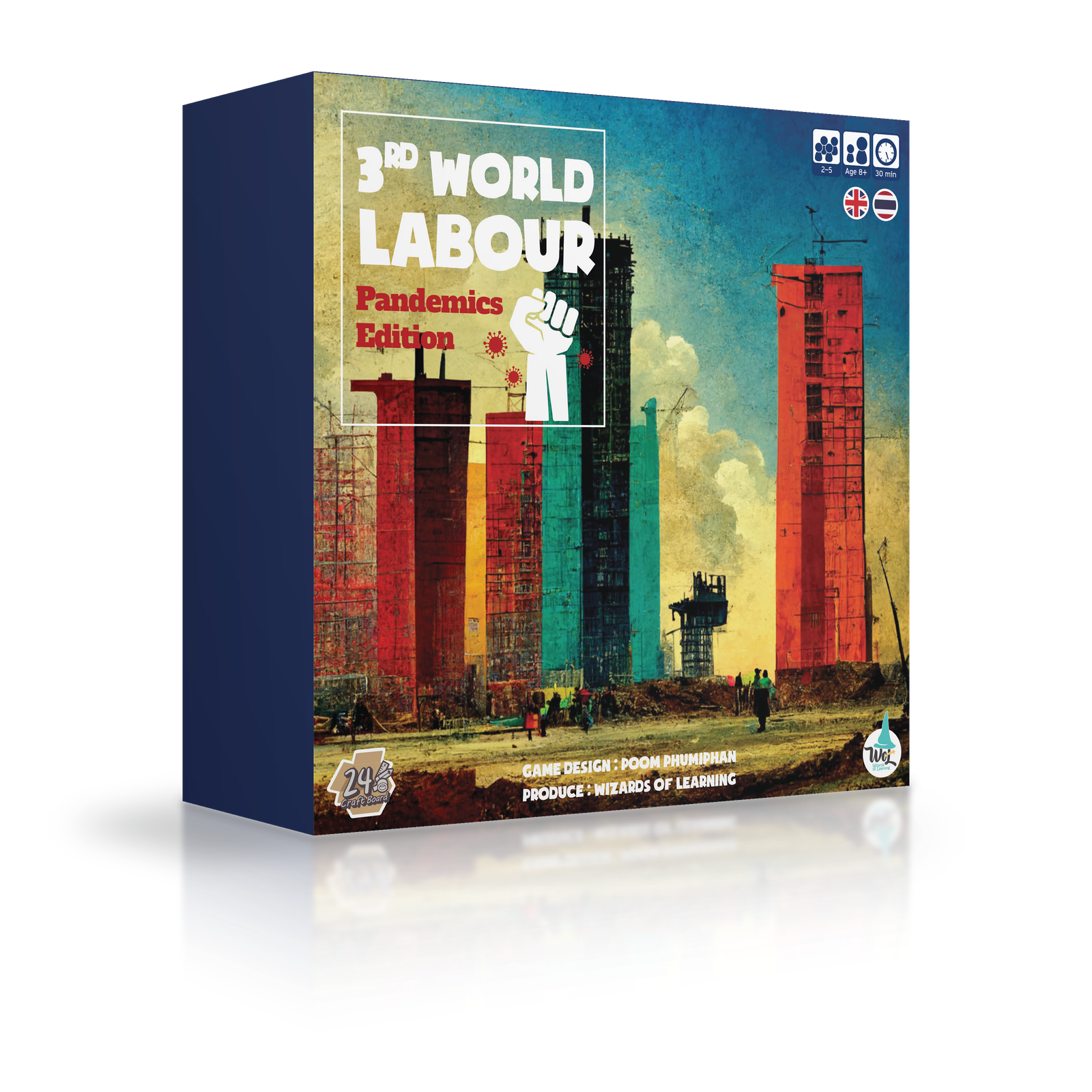
As a worker during a pandemic, choose between working on construction sites and staying home. Manage income, expenses and debt. When the fourth building is complete, the player with the most money wins.
Ask the relevant organization about access and product details.
In use & related media · 1 sources →THE EXPERIENCE
You are a worker managing living costs and debt during a simulated pandemic.
Working earns income but carries risk; staying home allows rest while expenses continue.
Choose a site, place blocks and face risk.
Pay expenses, recover and optionally buy a skill.
Players aged 12 and up, teachers, facilitators and people interested in labour and social welfare.
Game groups, classrooms or discussions about income, risk and social welfare during a crisis.
OPEN THE BOX
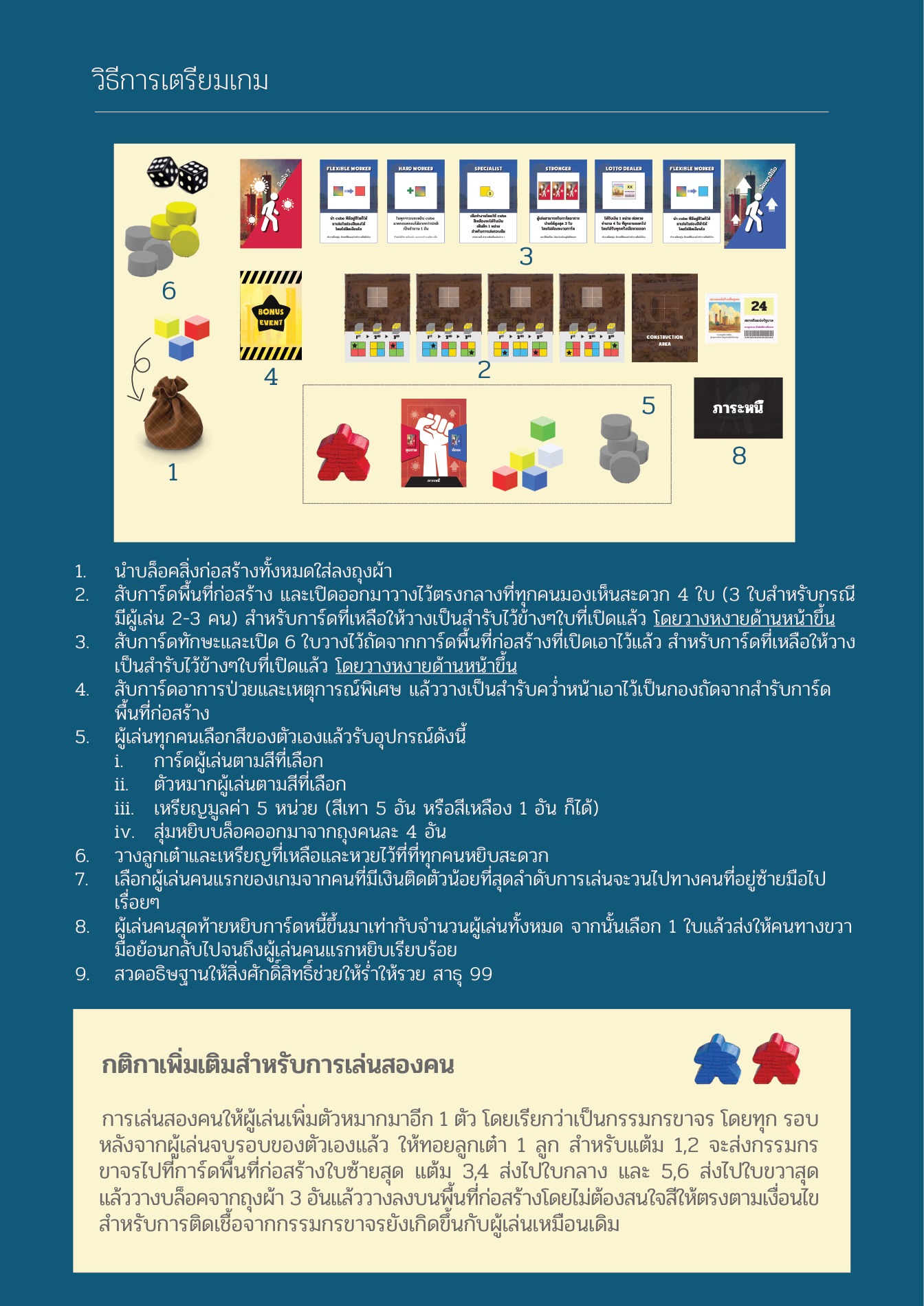
On each turn, work at a construction site for income while facing illness risk, or stay home and still pay living costs. Players may buy skills, repay debt, take loans or buy lottery slips under the rules. After the fourth building is completed, repay remaining debt; the player with the most money wins.
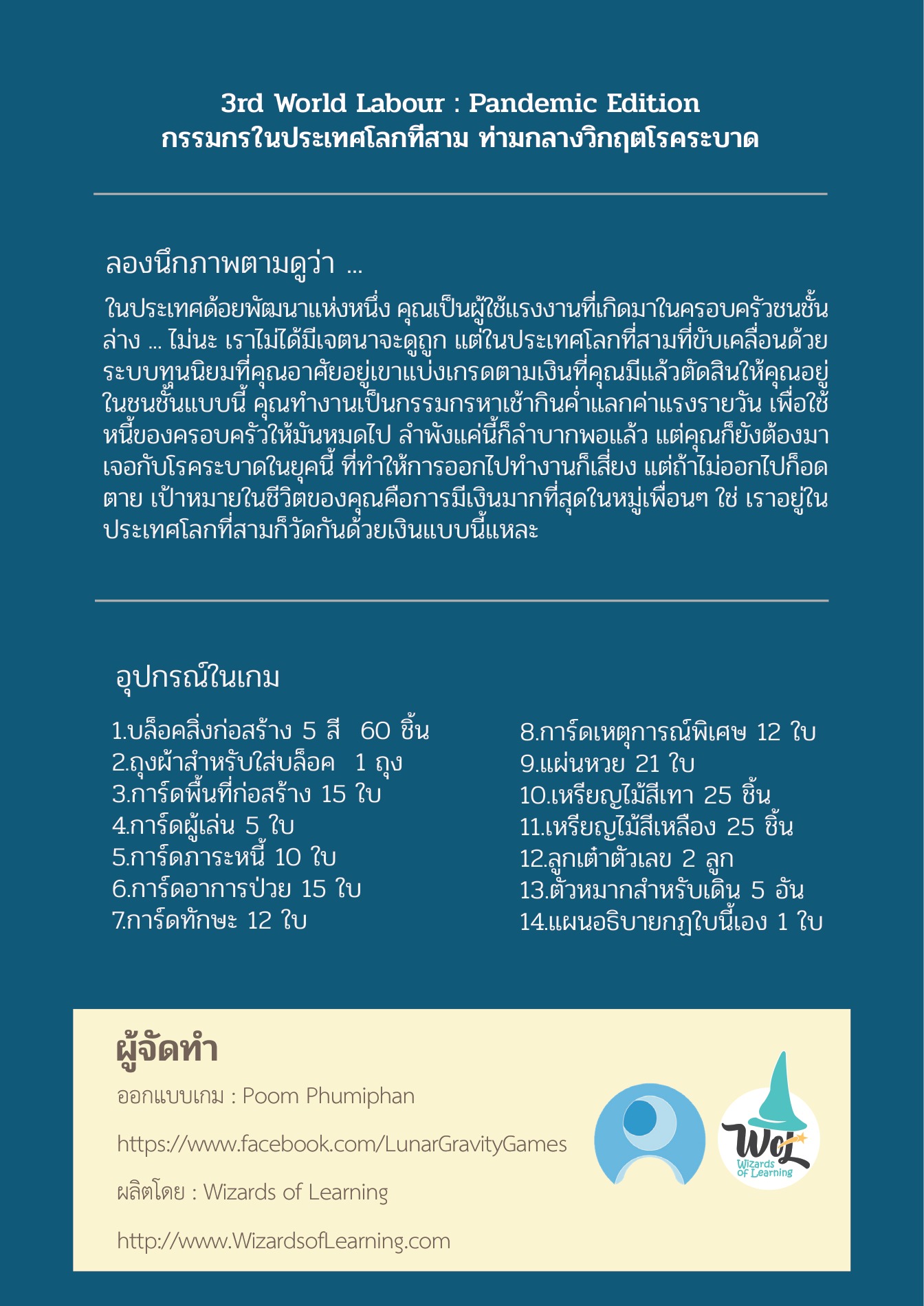
60 construction blocks, one bag, 15 construction-site cards, five player cards, 10 debt cards, 15 sickness cards, 12 skill cards, 12 event cards, 21 lottery slips, 25 grey and 25 yellow coins, two dice, five pawns and a rulebook.
Images from 3rd World Labour: Pandemic Edition source materials. Open an image for full size.
LEARNING THROUGH PLAY
Use the experience at the table as a starting point for questions and conversation.
Compare working outside and staying home within the game model.
Notice how expenses and debt affect choices each turn.
Discuss which worker realities the model includes and leaves out.
CONNECT WITH LEARNING GAME ATLAS
Explore the game’s information, mechanisms and sources in Learning Game Atlas to inform game selection and activity design.
Read the edition scope and conditions for each skill. Rule analysis describes opportunities; outcomes from actual use require separate evidence.
FROM PLAY TO CONVERSATION
For teachers, parents and facilitators. Adapt to your group and time.
Consider expenses that continue without income and explain that the game is a model, not a full account of workers’ lives.
Which expenses might continue if income temporarily stops?
Notice choices between working and staying home alongside expenses, debt and risks in the game.
Which constraints shaped a player’s choice this turn?
Compare game choices and seek trustworthy information about real working conditions and welfare.
How might choices change if conditions or welfare support were different?
PLAY OUT IN THE WORLD
Discover the game through events, player and teacher voices, and related studies.
Events, articles and videos from their original sources. Open each entry for its context, game edition and scope.
Showing 1 of 1 sources
An article describes the game’s design and conversations with daily-wage workers.
Article on Thai board-game development
Design account, not measured use outcomes
The article discusses the game generally; edition unspecified
MADE WITH CARE
Designer and producer credits follow the production rules; BGG lists Poom Phumiphan and Perus Saranurak as artists.
KEEP EXPLORING
Each game opens another perspective. Find the next question you want to explore together.
Explore all games & toolkits →
Elect a leader and see which projects can go ahead in two communities.
Request from organization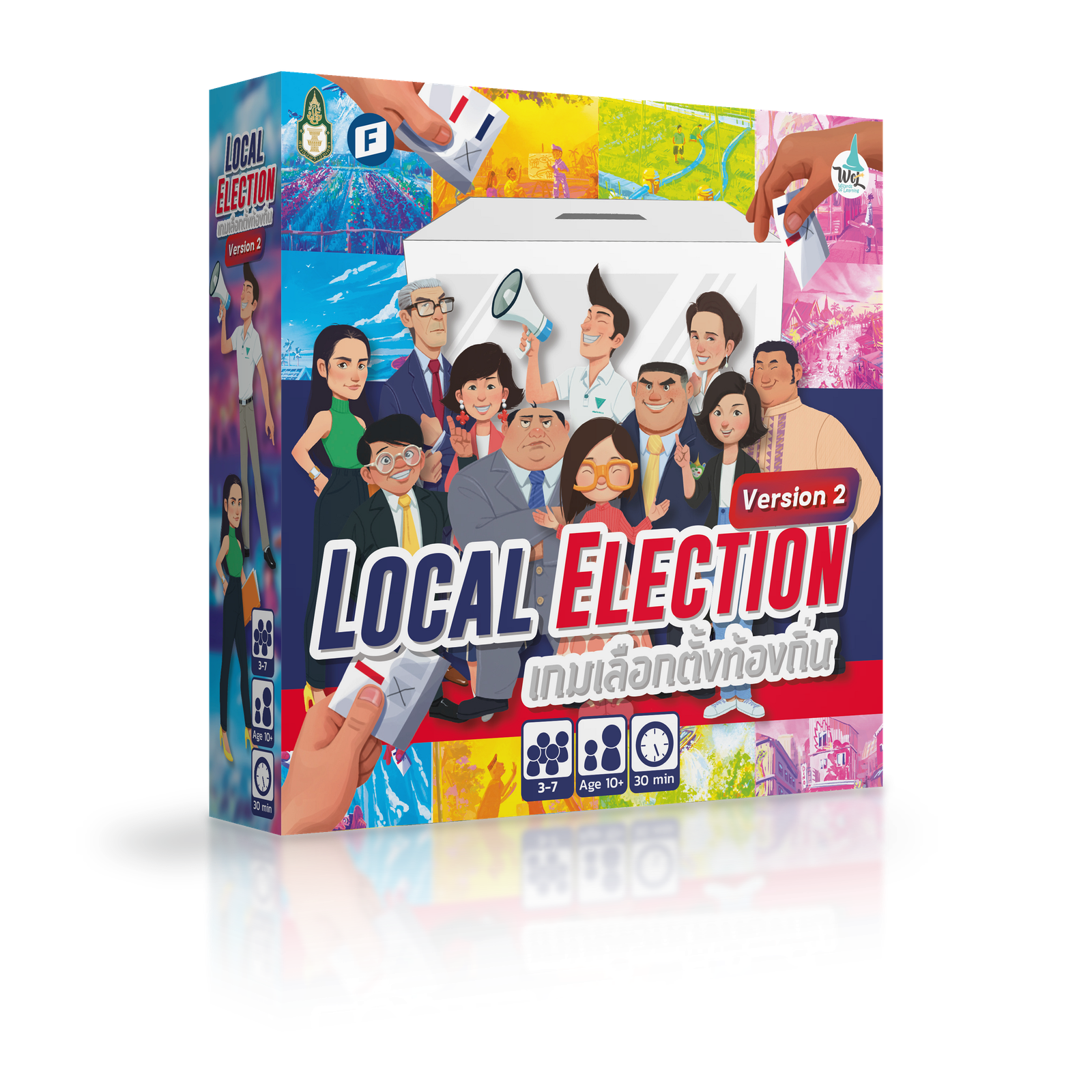
Elect a leader and see how budgets and policies shape your community.
Request from organization
Which problem do you tackle first when the whole community is waiting?
Request from organization