SHORT VIDEO · TIKTOK
Wishlist · Board Game Everyday (@markc.boardgame)
A short Wishlist clip and playing perspective linked from @markc.boardgame.
Watch on TikTok ↗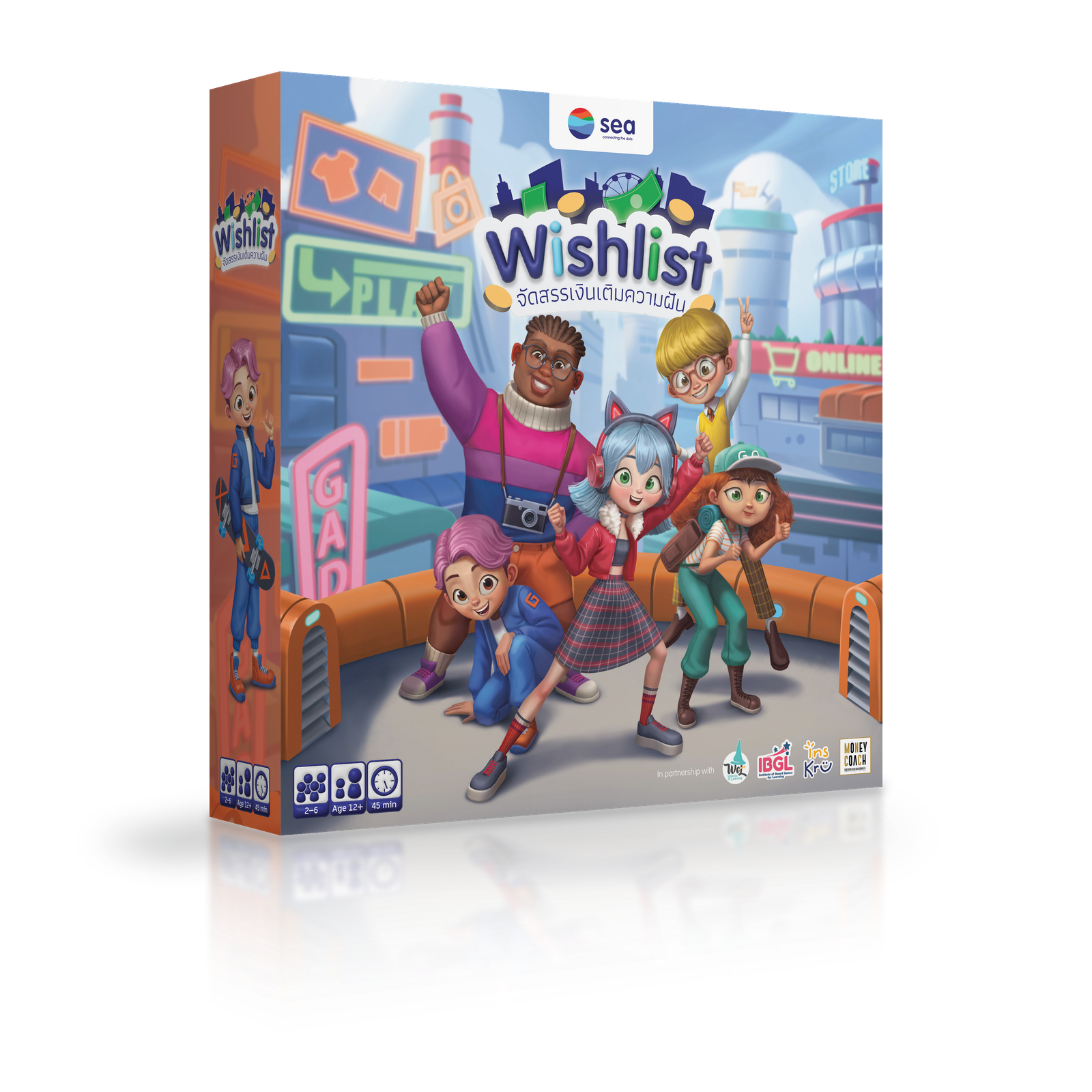





GAME · Money
Many wishes. One budget.
Manage money during a summer break, buy items to fulfill wishes, and make decisions about saving, installments and borrowing.
Check the shop for pricing and ordering details.
THE EXPERIENCE
In Wishlist Version 2, you are a teenager on a summer break, with your own list of wishes—from equipment for a hobby to experiences you want to try. Over five rounds, allocate money, earn income and collect the items needed to fulfill those wishes.
Each round, decide how much cash to keep, how much to save, and whether to work or shop. Some completed sets can increase income from part-time work, while changing prices and in-game events may prompt you to revise your plan. Each purchase affects opportunities and choices in later rounds.
After five rounds, score completed Wishlist cards, savings Objectives and gold, then apply the game’s deductions. The highest total wins. Along the way, players can try different plans and discuss which decisions brought them closer to their own goals.
More income gives you money, but choosing work means giving up that round’s opportunity to shop for your Wishlist.
Savings can earn interest, while cash covers spending and events. Choose a balance that fits your plan.
Choose items for your own wishes while considering current prices, possible future income and the rounds remaining.
For new players: explore earning, shopping, saving and preparing for risk through the basic rules.
Once familiar, add Pay Later installments and the rulebook’s advanced details to explore benefits alongside the obligations to manage.
Teachers, facilitators and players curious about this topic
A game group, classroom or activity adapted to its participants
OPEN THE BOX
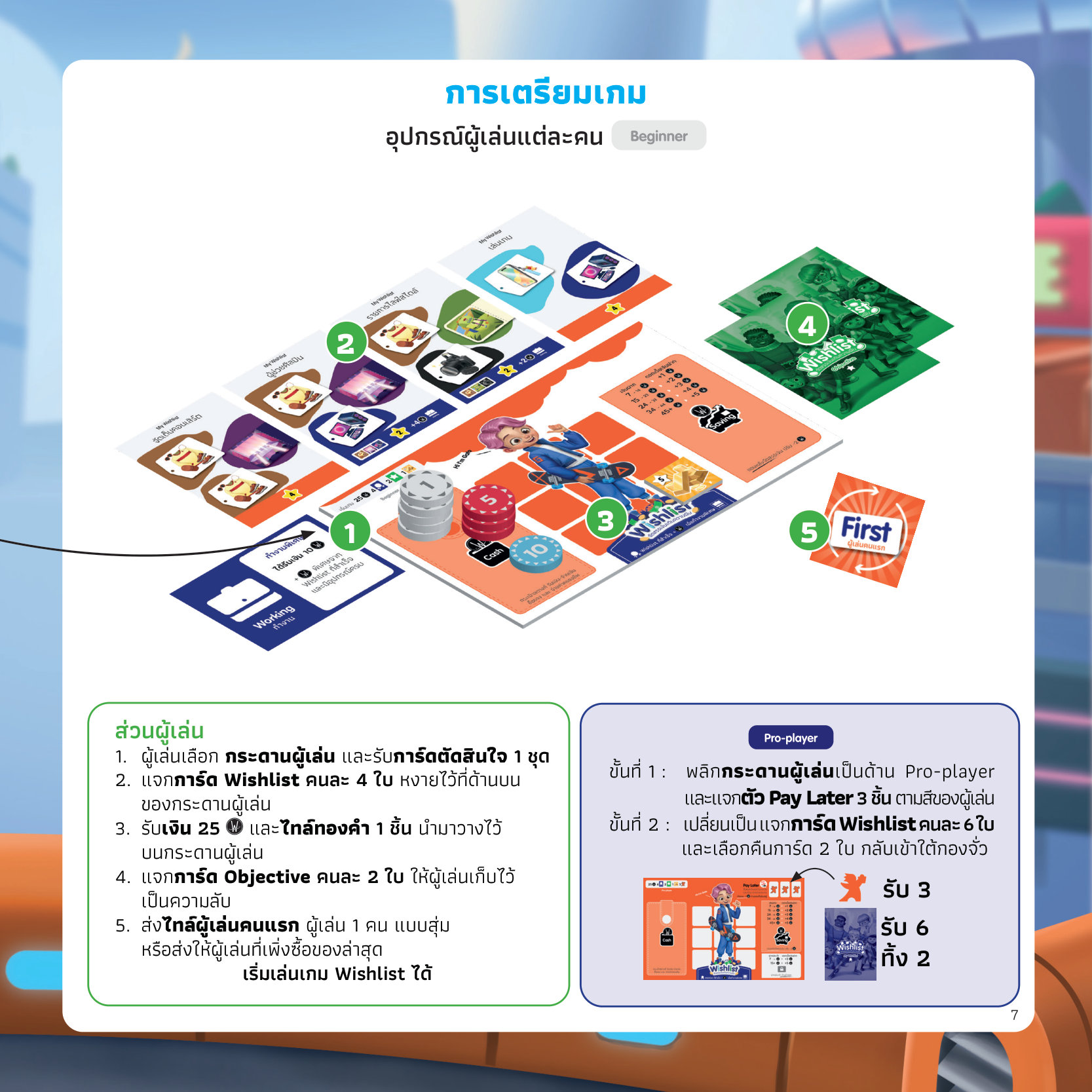
Play five rounds. In each round, collect your allowance and interest, allocate cash and savings and resolve an event, choose to work or shop, and pay the expense rolled on the die. If you run short on cash, you can withdraw savings for a fee or take emergency money that costs points at the end. After five rounds, score completed wishes, savings objectives and gold, then apply the deductions for your game mode. The highest score wins.
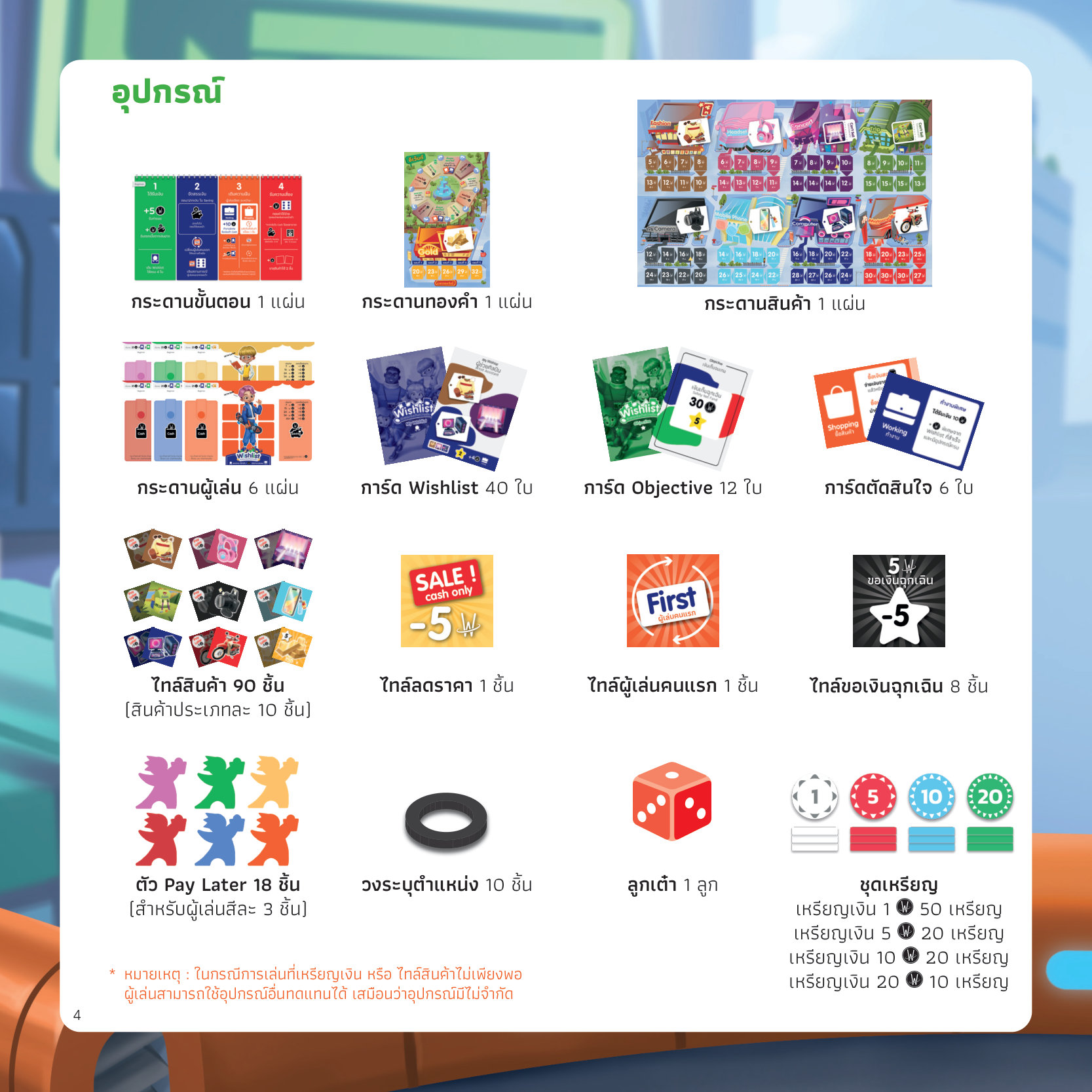
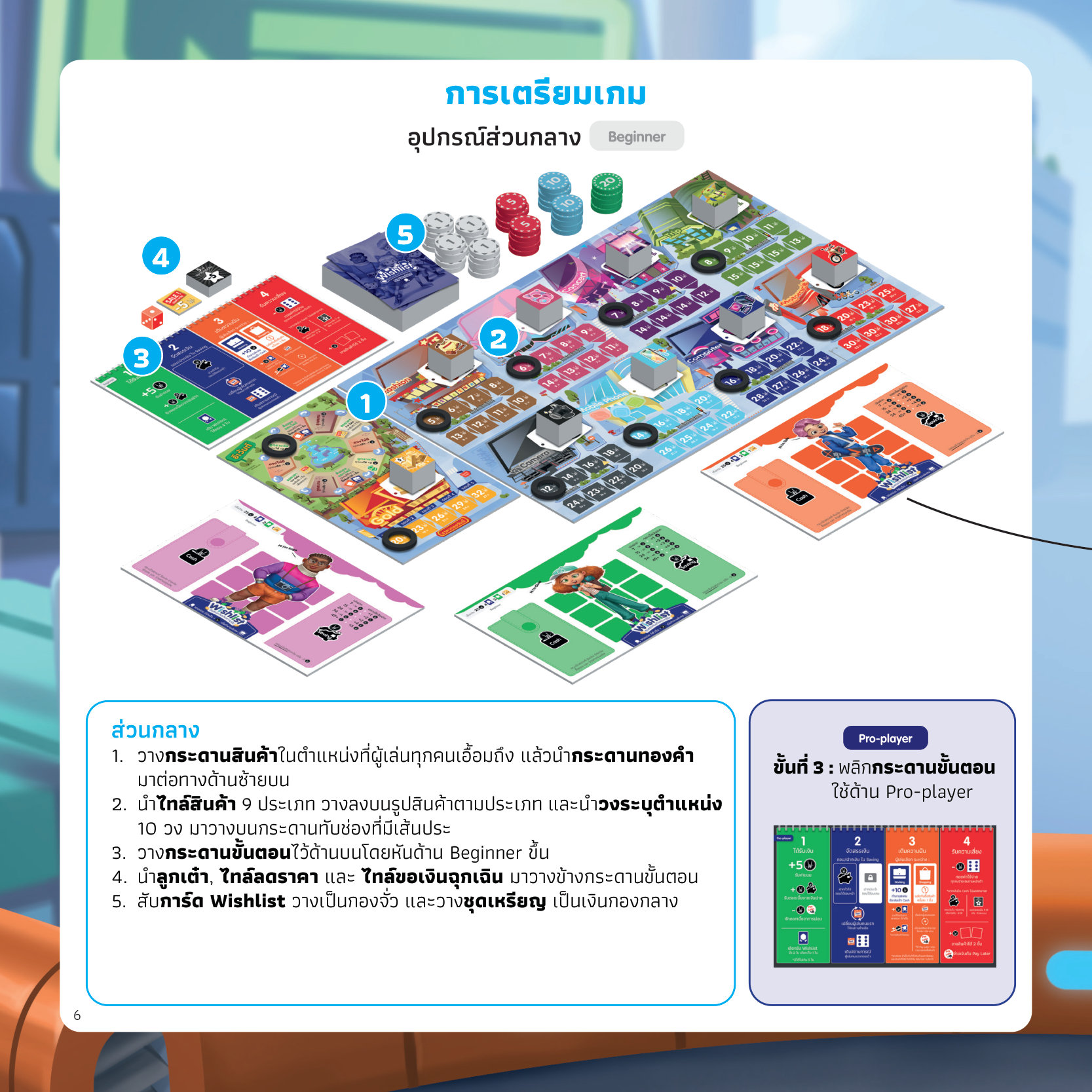
Includes a market board, gold board, phase board, six player boards, 40 Wishlist cards, 12 Objective cards, six decision cards, 90 item tiles, coins and other components shown below.
Images from Wishlist Version 2 source materials. Open an image for full size.
SHORT VIDEO · TIKTOK
A short Wishlist clip and playing perspective linked from @markc.boardgame.
Watch on TikTok ↗FULL HOW-TO · THAI
A Thai-language how-to-play video from Wizards of Learning, introducing the rules under the Wishlist V.2 title.
Watch on YouTube ↗FULL HOW-TO · ENGLISH
An English-language rules video on the WoL channel. Compare it with the rulebook supplied with your edition.
Watch on YouTube ↗If the TikTok player is unavailable, use the original link. Check the rulebook for the edition you are playing.
LEARNING THROUGH PLAY
Six topics drawn from the Wishlist Version 2 rulebook.
Wishlist and Objective cards ask players to balance short-term wishes with money saved at the end, within just five rounds.
Allocate income across expenses, purchases and savings, and explore how one spending decision changes the next round’s options.
Try saving for a desired purchase, calculate interest on deposits and keep money aside for unexpected in-game events.
In Pro-player mode, try Pay Later and track repayments, comparing earlier access to an item with the obligations that follow.
Choose between working and shopping, and consider Wishlist cards that add income. Time spent earning can leave less time to fulfill other wishes.
Item prices change as purchases happen. Explore buying and selling timing, and how a price relates to the value of an item for each player’s plan.
FROM PLAY TO CONVERSATION
Start with before, during and after play, then open the guidance that fits your group.
Read the rules and demonstrate one round. The rulebook recommends at most five player positions for a first session to reduce waiting; two learners can discuss decisions at one position.
What do you want, and what do you need? If you cannot afford everything, how will you choose?
Start new players with Beginner and introduce Pro-player when ready. Observe allocations, waiting, risk preparation and explanations while allowing players to make their own decisions.
Which goal does this choice support, and what options remain for the next round?
Use the rulebook’s three reflection levels: feelings → strategies → real life. Recall a fun or difficult moment, discuss what to change next time, then compare with situations outside the game.
Would you make the same decision in real life? What would you like to plan differently?
Adapt the activities to your group. Explore reports of actual use in In use & media →
PLAY OUT IN THE WORLD
Discover the game through events, player and teacher voices, and related studies.
Events, articles and videos from their original sources. Open each entry for its context, game edition and scope.
Showing 6 of 18 sources
Sea reports on the 13 September 2024 tournament at the Bank of Thailand Learning Center and distribution to schools and learning centers.
Schools · Tournament
Organizer report
Wishlist across editions
An educator reflects on playing at insKru Festival 2025 and on questions that help players discuss their decisions.
Teachers · Workshop
Participant account
Wishlist · Edition unspecified
The abstract reports a study of 72 pupils: financial knowledge and attitude scores rose after learning, while financial behavior did not change significantly.
Primary education · School study
Research abstract
Wishlist · Studied in academic year 2024
Purposive sample; the author lists a WoL affiliation. This abstract summary does not establish effects for every audience or lasting behavior change.
A Thai-language how-to-play video from Wizards of Learning, introducing the rules under the Wishlist V.2 title.
Getting started · Thai
Developer video
Video labelled V.2
A play video from the WoL channel, offered as a companion to discovering Wishlist V.2 at the table.
Play · Thai video
Developer video
Video labelled V.2
A Wishlist workshop feedback video on the WoL channel. Follow the original recording for participant perspectives.
Facilitator training
Participant voices · Published by WoL
Wishlist · Edition unspecified
MADE WITH CARE
Credits follow the Thai Wishlist Version 2 rulebook and the English rulebook, which additionally credits its translator.
KEEP EXPLORING
Each game opens another perspective. Find the next question you want to explore together.
Explore all games & toolkits →
Choose your work, set money aside and plan for tax across four simulated years
Request from organization
Spend your time earning more or making room for happiness
For sale
A small game. A bigger conversation about ecosystems.
For sale


