Income, expenses and risk
Compare work options, reserves and changing situations.



GAME · Money & tax
Choose your work, set money aside and plan for tax across four simulated years
Build skills, choose work, manage expenses and navigate tax across four simulated years.
THE EXPERIENCE
Players begin working life and build skills for employment, freelance work or trading. Each path has different requirements and earning opportunities.
Each year brings situations, expenses and risks to manage. Taxes paid to the shared treasury also connect to how situations are resolved in the game.
Compare skill costs with earning opportunities and risk.
Balance expenses, reserves, funds, insurance and the game’s tax model.
Young people, teachers, facilitators and people interested in financial planning
Classrooms, youth activities and conversations about money
OPEN THE BOX
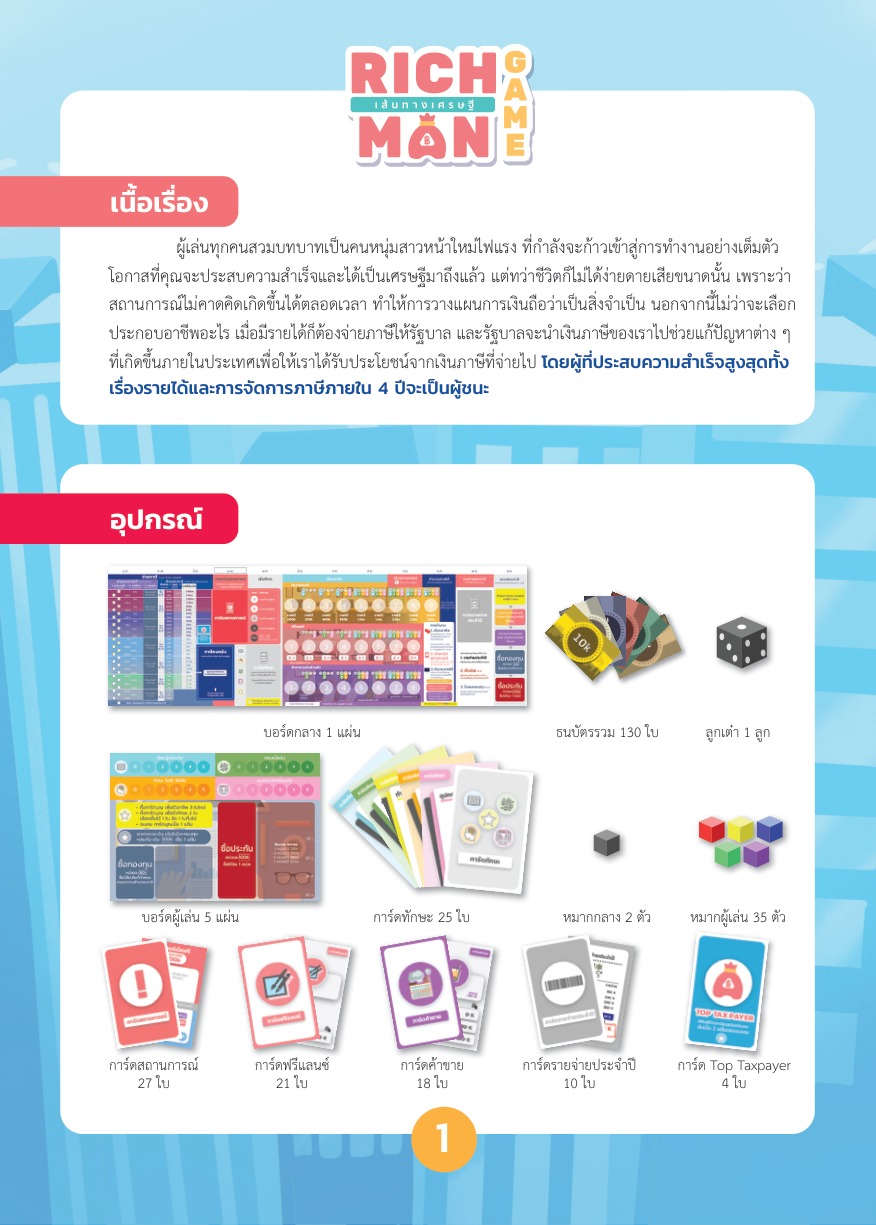
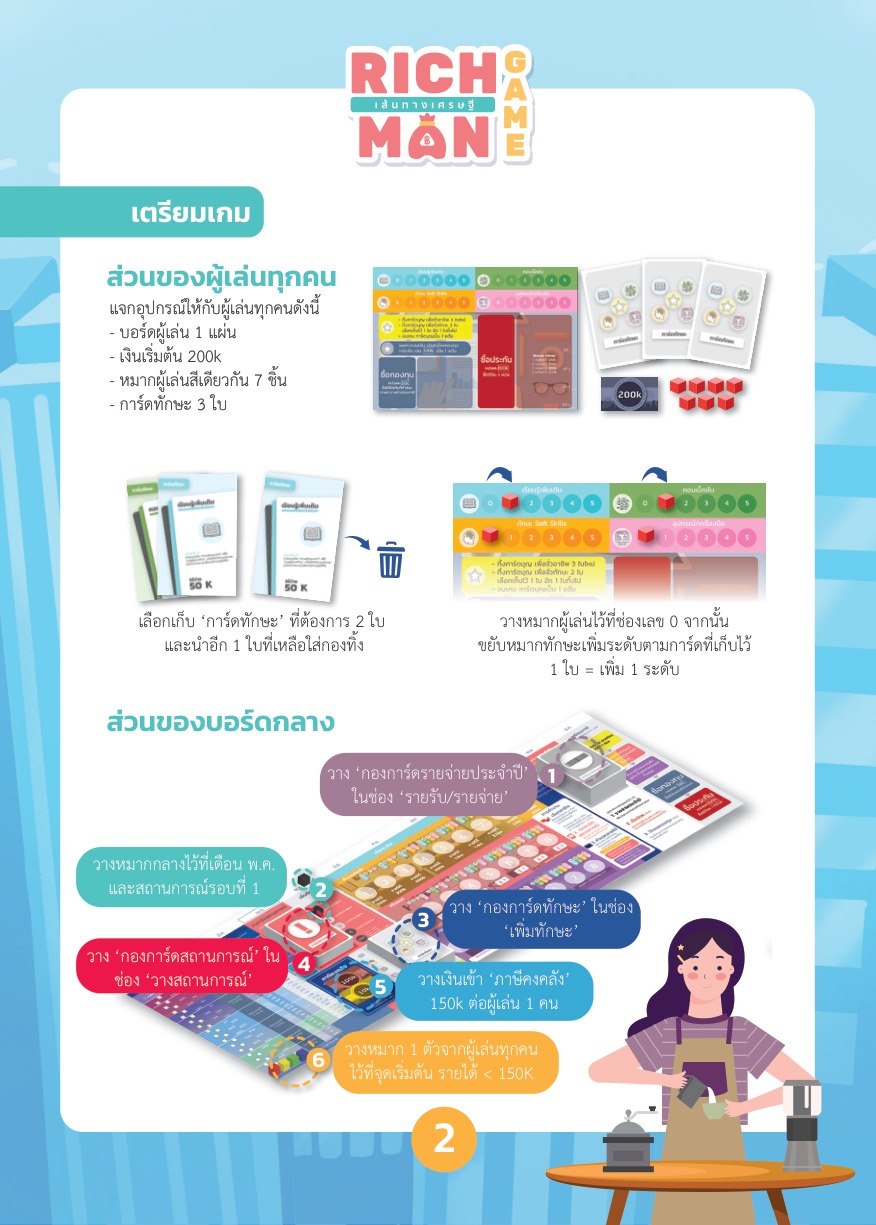
Over four simulated years, players build skills, choose employment, freelance work or trading, respond to situations and pay expenses. The shared tax treasury pays for situation cards, whose outcomes depend on whether enough money is available. Players make fund or insurance choices, calculate deductions and pay tax into the treasury. The highest taxpayer receives a Top Taxpayer card; if the highest amount is tied, no one receives it that year. After four years, score remaining money, money in funds and insurance, merit cards and Top Taxpayer cards; the highest total wins. The tax rules are a model from the 2020 game.
One shared board, five player boards, 130 banknotes, 25 skill cards, 27 situation cards, 21 freelance cards, 18 trading cards, 10 annual expense cards, four Top Taxpayer cards, one die, two shared markers and 35 player markers.
Images from Rich Man Game source materials. Open an image for full size.
LEARNING THROUGH PLAY
Use the experience at the table as a starting point for questions and conversation.
Compare work options, reserves and changing situations.
Explore funds, insurance and deductions within the 2020 game model.
Discuss how the game’s shared tax treasury relates to resolving situations.
FROM PLAY TO CONVERSATION
For teachers, parents and facilitators. Adapt to your group and time.
Compare familiar jobs, income and expenses. Explain that the game models 2020 tax rules and is not current tax advice.
What kinds of expenses might someone need to prepare for when receiving income?
Notice reasons for choosing skills, work, reserves, funds or insurance during the simulated years without sharing personal finances.
How did an event this round change your income or reserve plan?
Compare game choices and results with what the model leaves out; consult current official sources for real tax information.
How did tax and the shared treasury relate to players’ choices in the game?
MADE WITH CARE
Based on the production rulebook and the designer confirmation; some English spellings remain to be verified.
KEEP EXPLORING
Each game opens another perspective. Find the next question you want to explore together.
Explore all games & toolkits →