Food variety
Explore local dishes, dishes from other places and friends’ choices.
GAME · Food & nutrition
Create a school lunch tray
Pick four dishes, then vote for the tray you’d like to try
Move around the canteen, build a tray that earns stars for nutrition and student needs, then hear which tray your friends would try.
Use the form linked on the project page to request the files.
THE EXPERIENCE
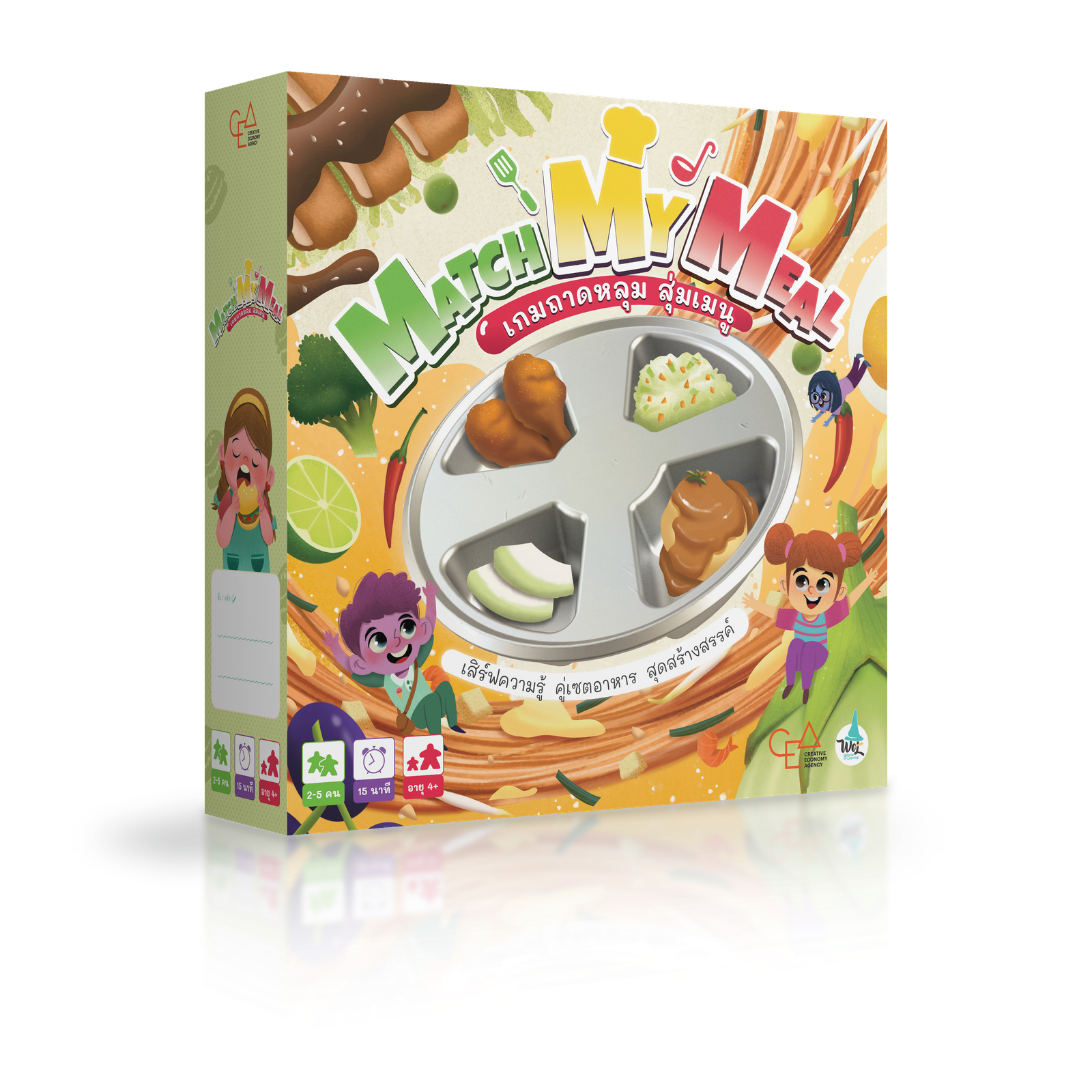
Players become school-lunch creators, collecting dish cards to assemble trays and exploring nutrition proportions and the needs on student cards.
Alongside scoring, players vote for a favorite tray and use it to talk about dishes, variety and foods they would like to try.
Choose a dish from the row you reach and notice its symbols.
Vote for another player’s tray and share your reasons after play.
Children, teachers, parents and food-activity facilitators
Classrooms, school-lunch activities and family learning
Connections to themes in the game, not evidence of measured outcomes.
Explore food choices and nutrition, connecting with the nutrition aspect of Goal 2.
Read the UN goal ↗This content has not been approved by the United Nations and does not reflect the views of the United Nations or its officials or Member States. United Nations SDGs ↗
OPEN THE BOX
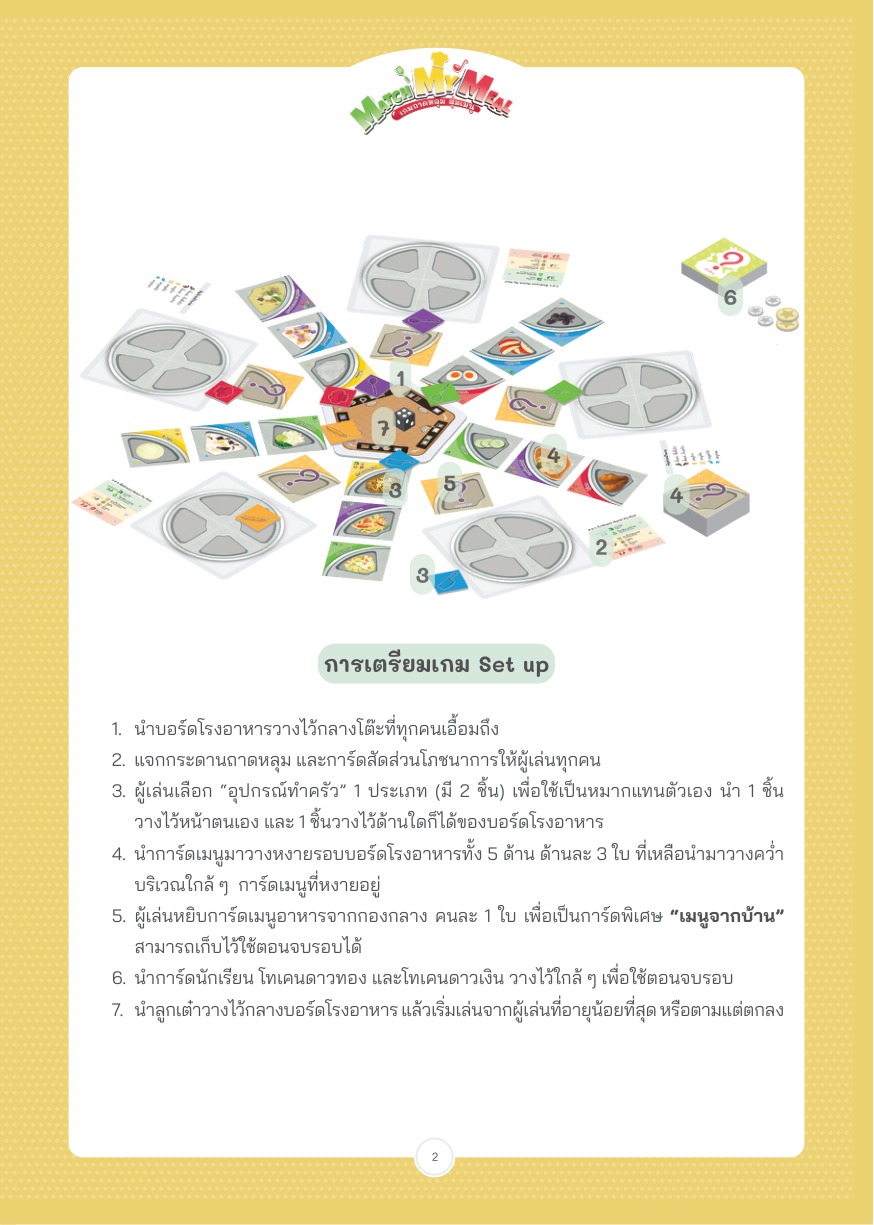
Take turns rolling the die, moving your utensil token and picking a dish from the row you reach. Once everyone has four dishes, you may replace one with your home-menu card. Reveal three shared student cards and score silver stars for nutrition proportions and student needs. Everyone tied for the most silver stars earns one gold star. Vote for another player’s tray and keep the favorite for discussion. The game ends when a player has two gold stars. The rulebook suggests that beginners first pick four dishes and count their symbols.
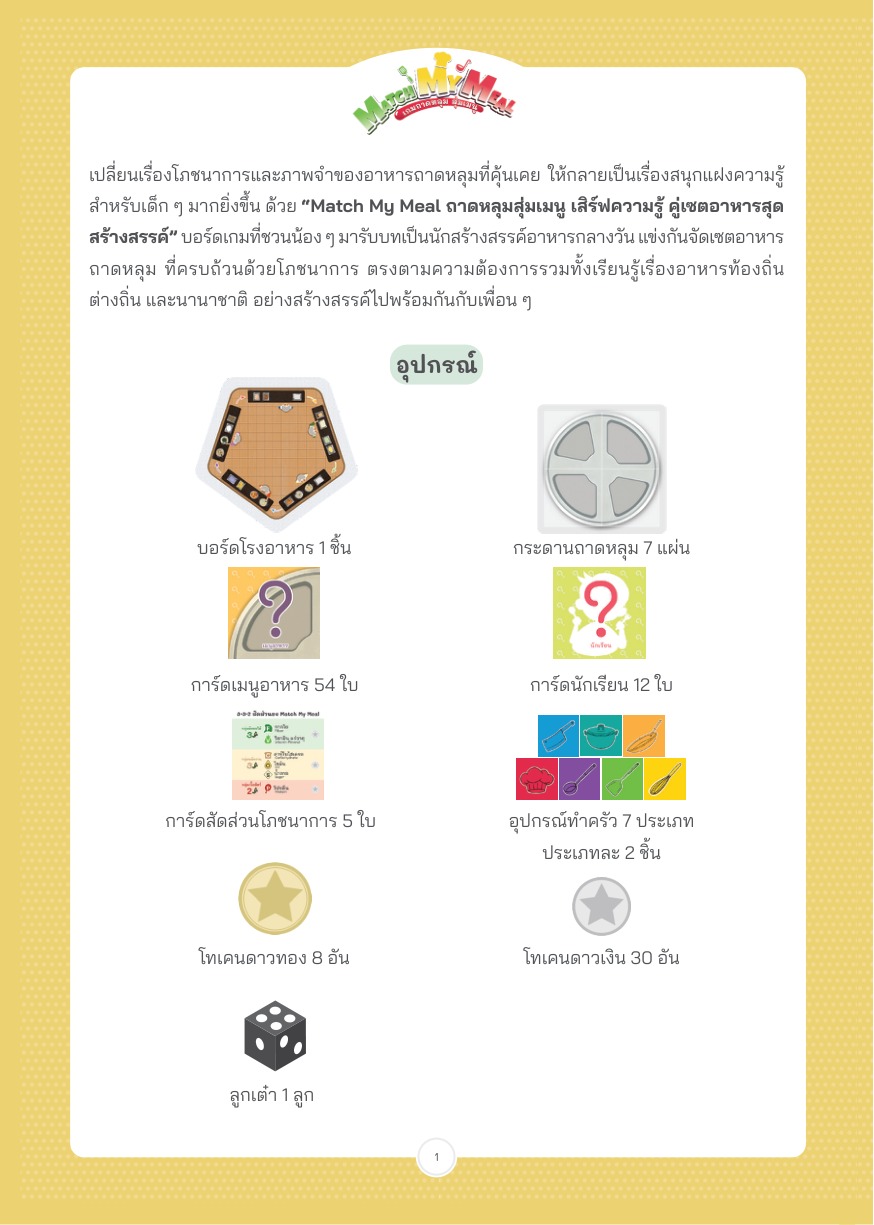
One canteen board, 12 student cards, 54 dish cards, five nutrition proportion cards, seven tray boards, 30 silver stars, eight gold stars, two tokens for each of seven kitchen utensils, and one die.
Images from Match My Meal source materials. Open an image for full size.
LEARNING THROUGH PLAY
Use the experience at the table as a starting point for questions and conversation.
Explore local dishes, dishes from other places and friends’ choices.
Compare card symbols and tray proportions within the game model.
Notice how student cards describe different dietary conditions.
FROM PLAY TO CONVERSATION
For teachers, parents and facilitators. Adapt to your group and time.
Let children look at the dishes and share interests voluntarily, without judging anyone’s answer or body.
Which dishes do you know or want to try?
Let children choose cards and arrange trays themselves; invite them to notice proportion symbols and the student card’s needs.
Why did you choose this dish, and what foods are on your tray?
Invite children to describe favorite trays and listen to others. Discuss variety without using game scores to judge anyone’s real meals.
If you could add one more dish, what would you like to try?
PLAY OUT IN THE WORLD
Discover the game through events, player and teacher voices, and related studies.
Events, articles and videos from their original sources. Open each entry for its context, game edition and scope.
Showing 6 of 6 sources
CEA describes the Lunch and Learn background, game goals and access to the Print & Play edition.
Project · Primary source
Project information from the organizing agency
Match My Meal, 2022 project
CEA reports testing the prototype with pupils and staff from five schools to inform improvements before production.
Khon Kaen · Prototype playtest, 6–8 July 2022
CEA activity report; not a measured learning outcome
Pre-production Match My Meal prototype
CEA reports a play activity for children and distribution of the Print & Play edition.
Bangkok · Children’s Day activity
CEA activity report; not a measured learning outcome
Match My Meal and Print & Play
WoL suggests discussing meals and ingredients during play and reflecting on food afterward, with a how-to link.
Teacher guidance · nutrition
Guidance from the developer, not a measured learning outcome
Match My Meal and Print & Play
Bangkok Christian College lists Match My Meal as a nutrition activity for Grade 1 in its October 2023 camp plan.
School camp plan · October 2023
Activity announcement; does not confirm delivery or learning outcomes
Game named; edition unspecified
The designers link to this tutorial in their teacher guidance on insKru.
Watch alongside the rulebook before play
Tutorial linked by the design team
Match My Meal · 2022 project resource
MADE WITH CARE
Roles follow the 2022 project rulebook. The illustrator’s English spelling follows the Wishlist V2 rulebook. Other names awaiting confirmation appear as printed in Thai.
KEEP EXPLORING
Each game opens another perspective. Find the next question you want to explore together.
Explore all games & toolkits →
Reflect on experience. Explore another perspective.
For sale
A small game. A bigger conversation about ecosystems.
For sale
Turn something worth sharing into something people can play.
For sale