Diverse coastal habitats
Meet tidal marsh, mangrove and seagrass habitats in the model.
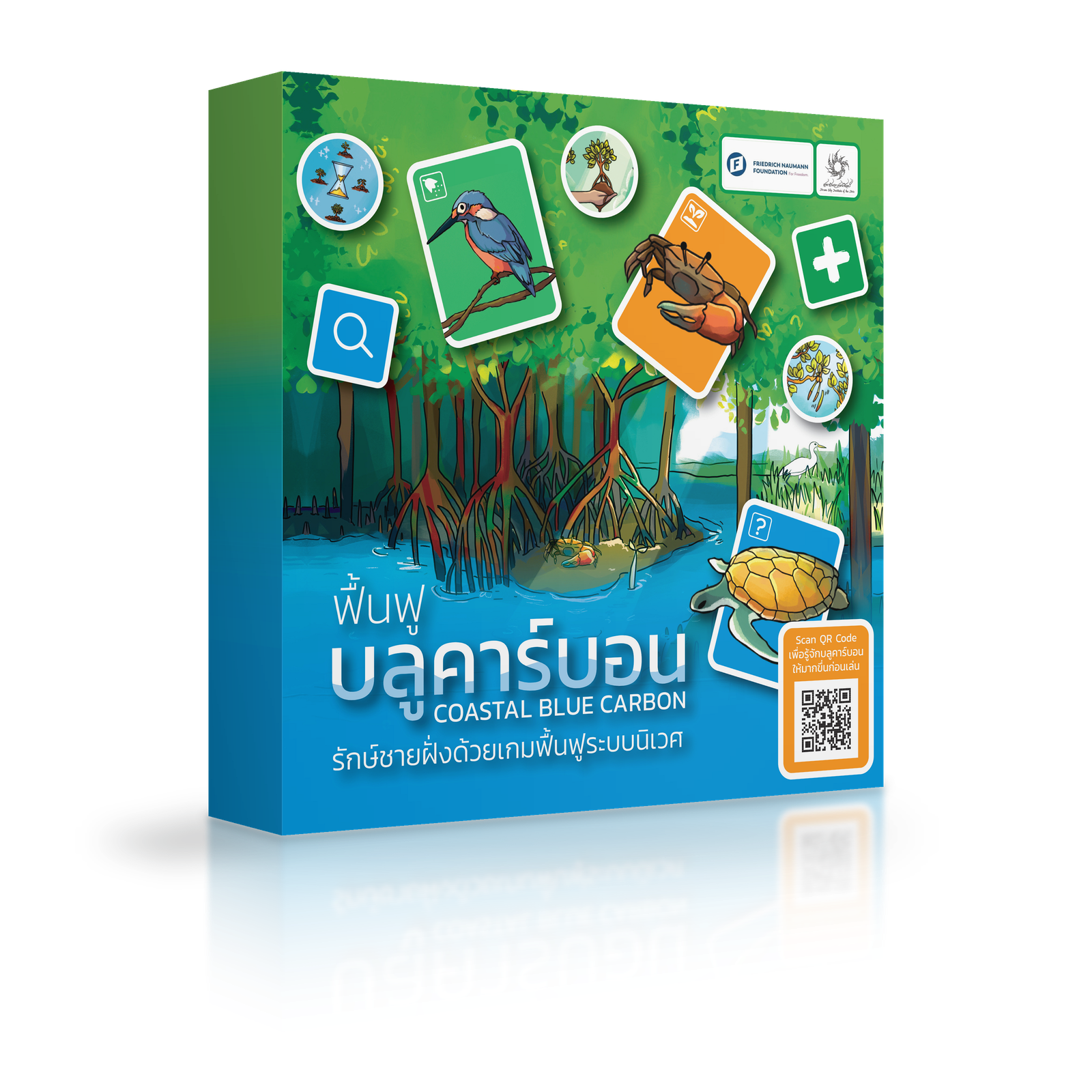



GAME · Coastal ecosystems
Blue Carbon Board Game

Restore the coast one habitat at a time and see which animals can move in
Restore coastal habitats by matching natural factors, studying sites and responding to events over five rounds.
Ask the relevant organization about access and product details.
In use & related media · 4 sources →THE EXPERIENCE
Players restore tidal marshes, mangroves and seagrass habitats by matching natural-factor symbols to each site’s conditions.
Site studies, dice and events change the situation at the table before players score carbon and biodiversity after five rounds.
Consider revealed symbols and factors saved for later.
Collect site-study sheets and adapt to positive and negative events.
Children, young people, teachers and people interested in coastal ecosystems
Classrooms, environmental activities and coastal-learning sessions
Connections to themes in the game, not evidence of measured outcomes.
Restore coastal ecosystems in the game, connecting to marine and coastal ecosystem conservation and restoration.
Read the UN goal ↗Explore relationships between coastal ecosystems, carbon and climate change.
Read the UN goal ↗This content has not been approved by the United Nations and does not reflect the views of the United Nations or its officials or Member States. United Nations SDGs ↗
OPEN THE BOX
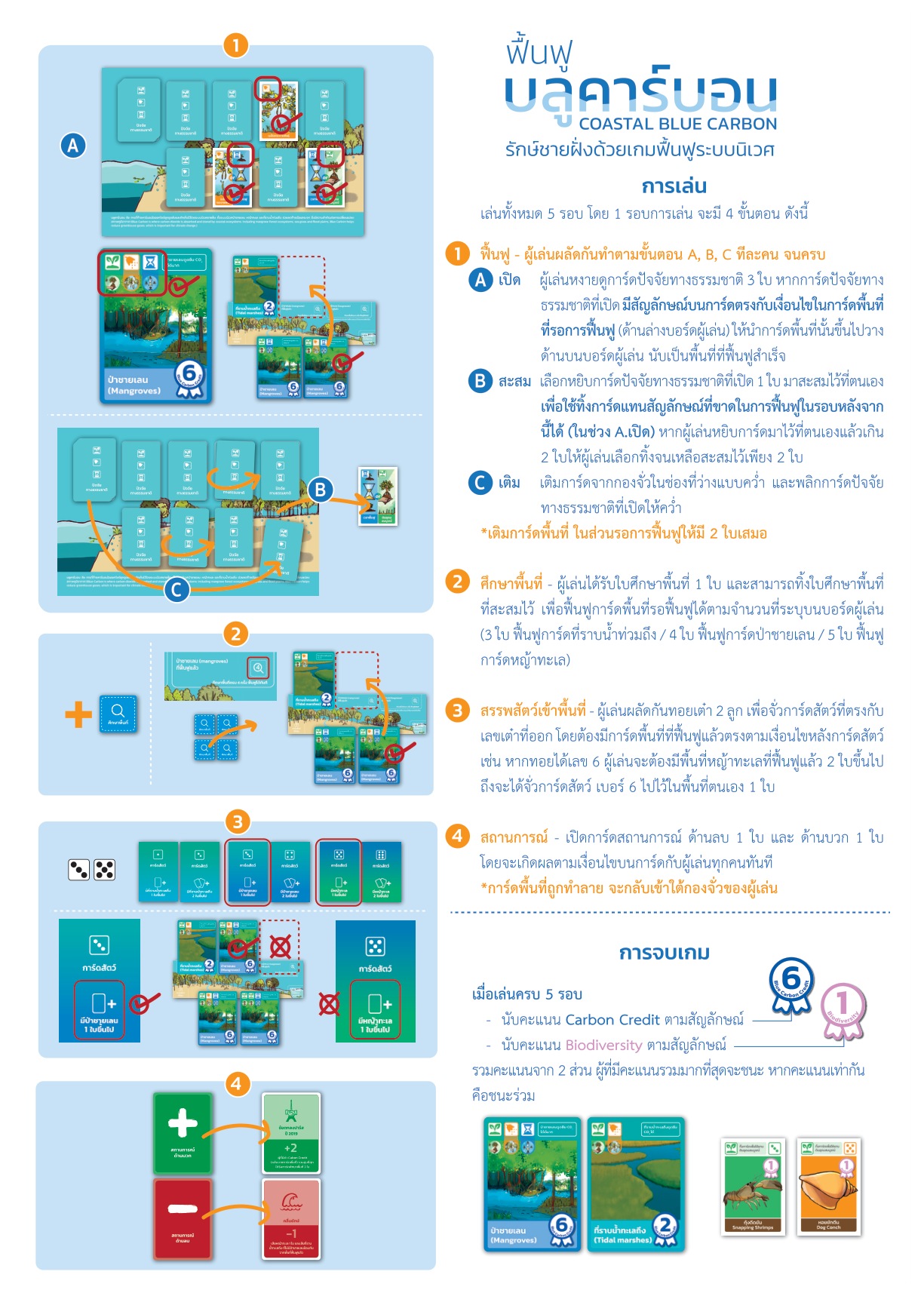
Play five rounds. In each round, reveal three natural-factor cards and match their symbols to restore a habitat. Save factors for later rounds and spend accumulated survey cards to open a new habitat when you meet its requirement. Roll two dice and gain an animal card when your restored habitats meet its conditions, then resolve one negative and one positive event. After five rounds, add Carbon Credit and Biodiversity points. The highest score wins, with ties sharing victory.
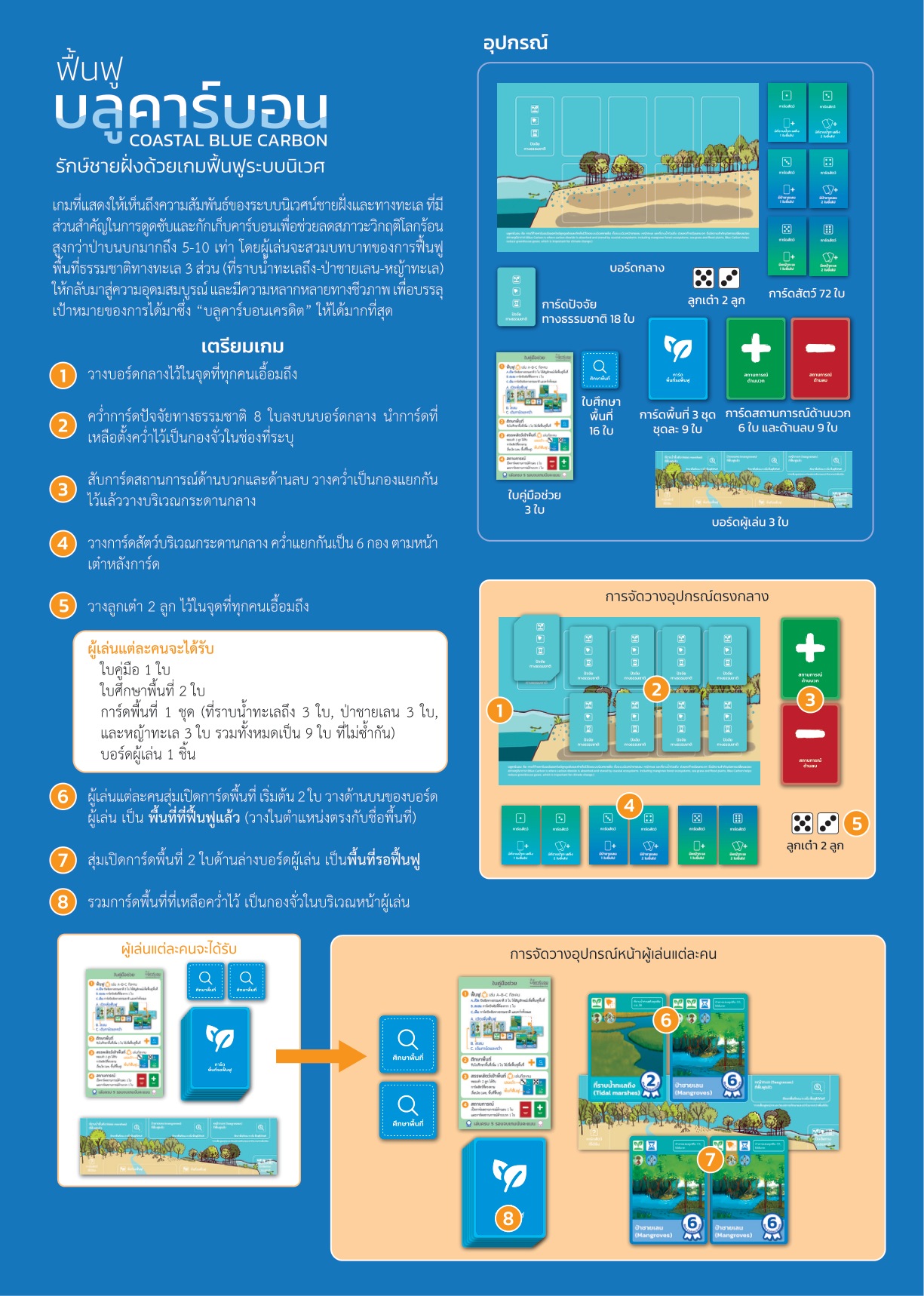
One shared board, three player boards, 18 natural-factor cards, 72 animal cards, three sets of nine habitat cards, 16 site-study sheets, three player aids, six positive and nine negative event cards, and two dice.
Images from Coastal Blue Carbon source materials. Open an image for full size.
LEARNING THROUGH PLAY
Use the experience at the table as a starting point for questions and conversation.
Meet tidal marsh, mangrove and seagrass habitats in the model.
Notice the relationship between habitat restoration and receiving animal cards.
Use the two scoring dimensions as a starting point to explore real coastal habitats.
FROM PLAY TO CONVERSATION
For teachers, parents and facilitators. Adapt to your group and time.
Look at the coastal habitats and their wildlife, explaining that the game is a model of restoration.
How might different coastal habitats support different living things?
Notice matching natural factors to restore habitats, studying sites and conditions for receiving animal cards.
What did this restoration choice make possible in the game?
Connect Carbon Credit and Biodiversity scores with one decision, then consult scientific sources about real habitats.
What else matters in restoring a real habitat beyond what the game shows?
PLAY OUT IN THE WORLD
Discover the game through events, player and teacher voices, and related studies.
Events, articles and videos from their original sources. Open each entry for its context, game edition and scope.
Showing 4 of 4 sources
FNF reports a field visit and showing the game prototype to local officials and residents.
Rayong · Field visit and prototype display
Development partner’s report
Blue Carbon Board Game prototype
TK Park lists ฟื้นฟูบลูคาร์บอน among games invited for an environmental-themed activity.
TK Park · Theme listed for 11 January 2026; the page’s event date range begins 8 February
Event listing; does not confirm play, attendance or learning outcomes
Edition unspecified in source
Sustainability Expo reports a Blue Carbon Restoration play activity at SX IDEA LAB, led by Perus Saranurak on 1 October 2025.
Green Play Zone activity · 1 October 2025
Organizer’s activity report, not a measured learning outcome
Blue Carbon Restoration · Edition unspecified
The organizer reports that a group played the game during the session. The SX Idea Lab program page provides the schedule and an embedded video.
TK Park lists Blue Carbon Restoration among games invited for an activity at Bangkok Children’s Discovery Museum in Chatuchak.
Tour announcement · 18 January 2026 · Bangkok Children’s Discovery Museum
Event listing; does not confirm play or learning outcomes
Edition unspecified in source
MADE WITH CARE
Designer and publishers follow the confirmed 2023 edition details. FNF identifies the development contributor. Organization marks follow the box cover.
KEEP EXPLORING
Each game opens another perspective. Find the next question you want to explore together.
Explore all games & toolkits →
A small game. A bigger conversation about ecosystems.
For sale
Enough water. The right quality.
Request from organization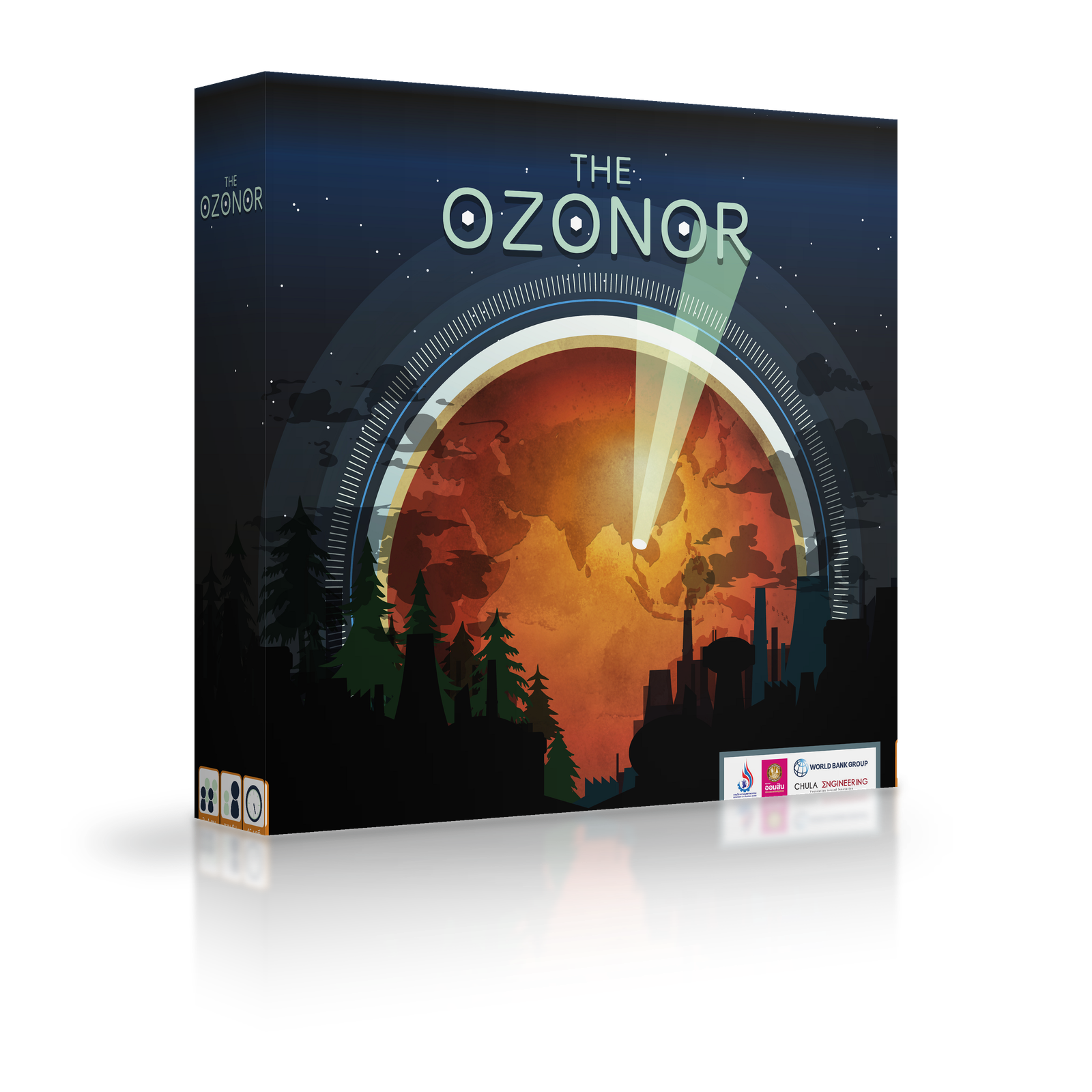
Run a profitable factory before rising temperatures make everyone lose
Request from organization